


EMI Shielding Products
- Custom Gasket Fabrication
- Connector Gaskets
- Bonded O Ring
- Custom Gaskets
- Conduct-O-Knit Knitted Wire Mesh
- Conduct-O-Seal Combo Gasket
- Conduct-O-Elastomer
- Conduct-O-Seal Oriented Wire in Silicone Gasket Material
- Conduct-O-Mesh Tape
- Conduct-O-Foam
- Conduct-O-Bond
- Optical Filters For Electronic Displays
- Shielded Vent Panels
- 300 Series
Custom EMI Gasket Fabrication
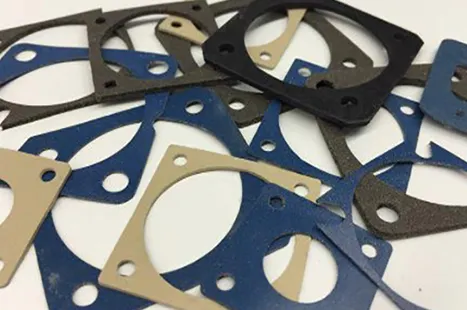
What determines the right material family, and what prevents seam failures in production builds
Custom EMI gaskets exist because seams fail. Not the enclosure walls, not the concept of shielding. The seam fails when mating surfaces do not maintain reliable electrical continuity and environmental sealing under real conditions: uneven joints, limited closure force, temperature swings, vibration, chemical exposure, and imperfect tolerance stacks.
A useful custom EMI gasket page has one job. It must reduce guesswork. It must make it easier to select the correct material family for a specific enclosure and make it obvious what information is required to quote and build the gasket correctly the first time.
East Coast Shielding supports most custom EMI gasket requirements using three material families already on-site and documented in the product documentation: ECS4 Oriented Wire in Silicone, ECS3 Conduct-O-Elastomer, and ECS300 non-conductive silicone and elastomers. Each exists for different seam realities.
Quote Accuracy Starts With Complete Inputs, Not Conversation Loops
A gasket recommendation cannot be correct without a description of the enclosure. That is not a sales statement. It is a manufacturing and engineering constraint. Thickness, environment, hole details, and tolerances dictate whether a gasket can be fabricated, compressed correctly, and remain stable over time.
At East Coast Shielding the minimum inputs required to quote and build correctly include the following:
- Drawings
- Material callout
- Any required specifications
- Dimension tolerances, more detail is better
- Thickness
- Environment
- If holes are required: hole dimensions and tolerances
- Material requirement
That list exists because each missing item creates the same predictable failure modes. Missing thickness leads to compression and deflection mismatch. Missing environmental information leads to an incorrect binder choice. Missing hole tolerances lead to fit issues and redesign. Tolerances are not a formality; they are the difference between a gasket that sits correctly under compression and one that distorts, shifts, or gaps at the seam.
Material Family Selection Is the Main Decision, Not “EMI Gasket Vs EMI Gasket”
Once the enclosure is defined, gasket selection becomes a material-family decision. The correct family is the one that matches the controlling constraint at the seam.
Three families cover most custom needs:
- ECS4 Oriented Wire in Silicone
- ECS3 Conduct-O-Elastomer
- ECS300 non-conductive silicone and elastomers
ECS4 Oriented Wire in Silicone
When the interface must hold contact across imperfect joints
Seam problems often show up as “EMI issues,” but the root cause is contact integrity. If the flange is uneven, if the joint needs compressibility, or if closure force is constrained, a gasket that assumes perfect surfaces will fail even if the material itself is conductive.
ECS4 Oriented Wire in Silicone is described as a combination EMI shield and environmental pressure seal. It is fabricated from individual wires, positioned perpendicular to the flange mating surface, and crimped to ensure proper contact. Binder options include solid silicone, solid fluorosilicone, and sponge silicone. Wire options include Monel, phosphor bronze, and aluminum.
The ECS4 document also provides application guidance that translates into selection logic:
- Oriented wire in sponge silicone is recommended for applications requiring EMI shielding and environmental sealing with low to moderate closure force. It is described as suited for severe joint irregularities, low closure force, a maximum operating pressure of 5 psi, or applications requiring greater compressibility than solid silicone.
- Oriented wire in solid silicone is described as designed for applications requiring moderate closure force, higher operating pressure, and a wider temperature range.
Those statements matter because they define the seam conditions ECS4 is built to handle. ECS4 is not only an EMI material. It is an interface system designed around maintaining contact at the mating surface.
ECS4 includes quantified design boundaries that support engineering decisions:
- Deflection operating range: 10 to 20 percent
- Compression force: 25 to 100 PSI, based on shape selection
- Joint unevenness accommodation: 0.005 to 0.015 inches
- Temperature range listed: -70 to 205 C
- Mounting methods: groove and pressure-sensitive adhesive, with PSA available on strips and sheets
ECS4 is also available in sheets and strips and can be supplied as die-cut parts or custom-fabricated designs. Larger widths can be vulcanized or bonded together, depending on binder and size requirements. That matters for custom work where the enclosure perimeter and flange contour do not fit standard strip dimensions.
ECS4 is the clean fit when the controlling risk is interface integrity. If joint unevenness and closure force are real constraints, this family is designed to accommodate them while providing EMI shielding and environmental sealing within a single gasket system.
ECS3 Conduct-O-Elastomer
When compound behavior and profile control are the controlling constraints
Some enclosure seams are mechanically stable and repeatable, but require a gasket selected based on compound performance, durometer, and frequency-specific shielding requirements. In those cases, the seam issue is not unevenness. The seam issue is selecting a conductive elastomer family that matches the environment and performance requirements.
ECS3 is a line of conductive silicone elastomers designed to meet the requirements outlined in MIL-G-83528 and used to produce shielding gaskets for military, aerospace, electronics, and communications applications. ECS3 includes extrusion standard profiles and molded sheet options, as well as continuous roll stock up to 15 inches wide.
The value of ECS3 is that selection is explicit.
The specifications table lists, by material family:
- Durometer
- Volume resistivity
- Operating temperature minimum and maximum
- Compression set
- Shielding effectiveness at 100 MHz, 500 MHz, 2 GHz, and 10 GHz
The document also includes qualifying data for certain types, with shielding effectiveness values at the same frequency points, as well as additional material characteristics.
This matters because it allows selection based on what drives reliability in production: compound, temperature range, and long-term compression behavior. A conductive elastomer can be the right approach when the enclosure maintains consistent compression and when gasket geometry requires controlled profiles and predictable sealing behavior.
ECS3 is the clean fit when the controlling variable is compound behavior and profile control. This family supports material selection using published properties and shielding effectiveness values at key frequencies, rather than relying on generic descriptions.
ECS300 Non-Conductive Elastomers
When conductivity is not required
A frequent source of unnecessary complexity is the assumption that every enclosure seam needs a conductive gasket. In many builds, the true requirement is sealing, insulation, or mechanical isolation. If electrical continuity at the seam is not required, using a conductive gasket can introduce unnecessary failure modes, including galvanic compatibility concerns and unnecessary design constraints.
ECS300 is a non-conductive silicone rubber and elastomer family on-site. In custom gasket conversations, it acts as a deliberate alternative when the requirement is sealing or insulation rather than EMI continuity. ECS300 is the clean fit when the job is sealing or insulation, not conductive seam continuity.
The Four Inputs That Determine a Correct Selection in Real Production
Material families only become actionable when seam constraints are explicit. Four inputs govern most decisions.
- Compression range and closure force: ECS4 lists a deflection operating range of 10 to 20 percent and a compression force range of 25 to 100 PSI, depending on the selected shape. ECS3 provides durometer and compression set values by material family, which indicates how the gasket will behave under sustained compression and how it will recover over time. If closure force is limited, that must be stated early. A gasket that cannot be compressed into its operating range cannot maintain electrical contact.
- Joint unevenness and flange geometry: Joint unevenness is a seam killer because it creates localized gaps. ECS4 addresses joint unevenness accommodation in the range of 0.005 to 0.015 inches and positions sponge silicone oriented wire as suitable for severe unevenness and low closure force cases. That is a direct acknowledgement that flange reality drives gasket selection.
- Environment: Environment dictates binder choice and survivability. ECS4 offers solid silicone, fluorosilicone, and sponge silicone binder options. ECS3 includes silicone and fluorosilicone material families and lists operating temperature limits and other properties by compound. If the application sees moisture, solvents, oils, or temperature extremes, the environment must be specified up front. It is not optional.
- Holes and tolerances: Hole patterns and tolerances drive fit, sealing reliability, and fabrication feasibility. Hole dimensions and tolerances should be included in the initial package if holes are required. This is why the quoting checklist explicitly calls them out.
Fabrication Method Decisions Follow Requirements, Not Preferences
A common misconception is that there is one best method. In custom work, the fabrication method follows specification requirements, geometry, and environmental constraints.
ECS4 supports strips, sheets, die-cut parts, and custom-fabricated designs, including bonded or vulcanized solutions for larger sizes, depending on the binder and width. ECS3 supports extrusion profiles and molded sheet formats, and notes PSA and custom mold sizes available by request.
When a customer specification requires a method, that requirement governs. When geometry and environment drive the decision, the method is chosen to produce a stable fit, stable compression, and reliable seam contact. That is the only reason fabrication method matters in custom EMI gaskets.
Managing Changes Is Part of a Stable Production Outcome
Custom EMI gaskets succeed in production when changes are treated realistically. Material changes are usually easiest, while dimensional changes usually require redesign. That is a practical rule to understand because it reduces late surprises. It reinforces the need to specify tolerances, hole details, thickness, and environment at the beginning.
Related Reading
- When Should You Choose Conductive Adhesive Over a Mechanical EMI Gasket for Compact Electronics?
- Is EMI Shielding Critical in Modern Electronics? Understanding the Risks and Solutions
- Choosing the Right EMI Shielding Gasket: Types and Applications for Optimal Performance
- EMI Gaskets, Shielding Gasket