


EMI Shielding Products
- Custom Gasket Fabrication
- Connector Gaskets
- Bonded O Ring
- Custom Gaskets
- Conduct-O-Knit Knitted Wire Mesh
- Conduct-O-Seal Combo Gasket
- Conduct-O-Elastomer
- Conduct-O-Seal Oriented Wire in Silicone Gasket Material
- Conduct-O-Mesh Tape
- Conduct-O-Foam
- Conduct-O-Bond
- Optical Filters For Electronic Displays
- Shielded Vent Panels
- 300 Series
When Should You Choose Conductive Adhesive Over a Mechanical EMI Gasket for Compact Electronics?
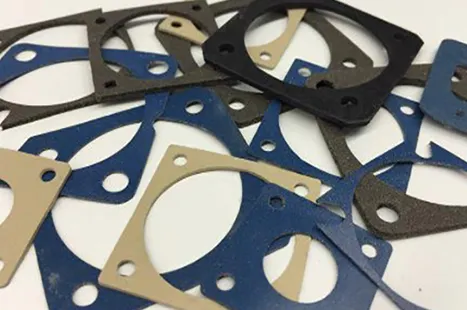
Compact electronics often cram circuits into housings so tight that there isn’t room for a traditional EMI shielding solution; the choice between a conductive adhesive and a mechanical gasket becomes less about preference and more about physics and maintenance. When the seam is irregular or the clearance is measured in fractions of a millimeter, a form-in-place bond may seem attractive. Yet, in serviceable devices, a removable gasket can keep a product out of the scrap pile.
The answer to the adhesive-versus-gasket question is straightforward: use adhesives when space and geometry demand a thin, conformal bond that will not be reopened; use mechanical gaskets when the device must be serviceable or when spring force is needed to maintain long-term electrical contact. Each option must still function as a reliable RF shield for the sensitive electronics inside, so understanding these trade-offs helps designers pick an EMI seal that meets both performance and manufacturing requirements without guesswork.
Understanding RF Shields and EMI Sealing Options for Compact Electronics
Compact devices pose unique sealing challenges: limited real estate, delicate components, and often irregular housing geometries. Two main technologies for EMI sealing in these environments are conductive adhesives and mechanical gaskets.
Conductive adhesives are pastes or liquids filled with conductive particles (commonly silver, nickel, or carbon) that cure to form a continuous conductive bond. NASA’s electrical bonding standard states that connections across joints can be achieved by overlapping panels, adding a conductive bridge secured by metal fasteners, or using a conductive adhesive across the joint. This guidance highlights that adhesives are an accepted method for providing electrical continuity when a mechanical fastening scheme is impractical or space-constrained.
Mechanical EMI gaskets include O-rings, rectangular strips, finger stock, and oriented-wire or fabric-over-foam products. They rely on compression to maintain metal-to-metal contact, and they can be removed and replaced if the device needs service. The Defense Logistics Agency’s Qualified Products List includes elastomer gaskets capable of 110 dB attenuation at 10 GHz, demonstrating that mechanical gaskets can meet stringent performance requirements.
Advantages of Conductive Adhesives
When space is at a premium or the mating surface is highly irregular, conductive adhesives offer flexibility that mechanical gaskets cannot match. A robotically dispensed bead can follow convoluted paths and fill voids, creating a uniform seal without adding thickness. Because the adhesive cures in place, it forms a continuous conductive barrier - there are no seams or joints that could compromise shielding. NASA’s standard notes that conductive bridges can replace bolts or straps across joints, showing that adhesives can serve as the sole conductive element.
In production, adhesives reduce part count and can simplify assembly. They eliminate the need for compression hardware and can be applied automatically. They are also useful for sealing around delicate components where compressive force could damage a printed circuit board or housing. For hermetic applications, conductive adhesives can fill pores and micro-gaps that a gasket might miss.
Advantages of Mechanical EMI Gaskets
Mechanical gaskets provide a spring force that maintains contact pressure over the product’s life. Silicone or fluorosilicone gaskets can withstand hundreds of compression cycles without losing elasticity, making them ideal for devices that may be opened for repair or battery replacement. Because the gasket is a discrete part, it can be removed and inspected or replaced if necessary.
Performance is another advantage. Qualified elastomer gaskets with silver-plated copper fillers deliver high shielding effectiveness into the tens of gigahertz. Finger stock and oriented-wire gaskets offer excellent surface penetration and can tolerate misaligned flanges. In addition, mechanical gaskets come in UL 94 flame-rated materials and can provide environmental sealing, which may be critical for consumer electronics exposed to moisture or dust.
Decision Framework: Adhesive or Gasket?
To choose between a conductive adhesive and a mechanical gasket, consider the following factors.
- Space and geometry: If the housing has complex curves or minimal clearance, a form-in-place adhesive may be the only viable option. Preformed gaskets require space for their cross-section and compression.
- Assembly and rework: Use mechanical gaskets when the device must be opened for maintenance or when assembly needs to be reversible. Adhesive seals are generally permanent; removing them often damages the housing.
- Performance requirements: For applications requiring attenuation above 80 dB at high frequencies, qualified elastomer gaskets offer published data. Adhesives can perform well but may need application-specific testing.
- Manufacturing process: Adhesives require controlled dispensing and curing; mechanical gaskets require compression hardware. Evaluate which process better fits your production line.
- Regulatory and environmental considerations: Mechanical gaskets are available in flame-retardant formulations and can meet military or medical device standards. Adhesive chemistries must be reviewed for outgassing, flammability, and chemical compatibility.
Choosing the Right EMI Seal for Your Device
Selecting an EMI sealing strategy ultimately involves matching the product’s design constraints to the strengths of each technology. For a sealed wearable with no user-serviceable parts, a conductive adhesive dispensed along the housing seam can provide a slim, effective barrier. For an industrial IoT module that must be repairable, a conductive silicone gasket with a low-profile cross-section offers reliable shielding and environmental protection.
Next Steps for Selecting an EMI Seal for Compact Electronics
Selecting the right EMI seal for a compact device means matching the technology to the physical constraints and service requirements. Adhesives excel when space is limited, and the seal will never be reopened; mechanical gaskets shine when maintenance or long-term contact pressure is needed. With those principles in mind, follow these steps to make a sound choice.
- Map space constraints: Sketch the enclosure seam and determine whether a gasket profile fits. If not, consider a form-in-place adhesive.
- Define service requirements: Decide whether the device will ever be opened. If yes, use a removable gasket.
- Verify performance: Obtain test data for candidate materials - qualified gaskets or adhesives - to ensure they meet shielding and flammability goals.
- Evaluate process capabilities: Assess whether your manufacturing line can dispense adhesives accurately or apply compression hardware.