


EMI Shielding Products
- Custom Gasket Fabrication
- Connector Gaskets
- Bonded O Ring
- Custom Gaskets
- Conduct-O-Knit Knitted Wire Mesh
- Conduct-O-Seal Combo Gasket
- Conduct-O-Elastomer
- Conduct-O-Seal Oriented Wire in Silicone Gasket Material
- Conduct-O-Mesh Tape
- Conduct-O-Foam
- Conduct-O-Bond
- Optical Filters For Electronic Displays
- Shielded Vent Panels
- 300 Series
Is EMI Shielding Critical in Modern Electronics? Understanding the Risks and Solutions
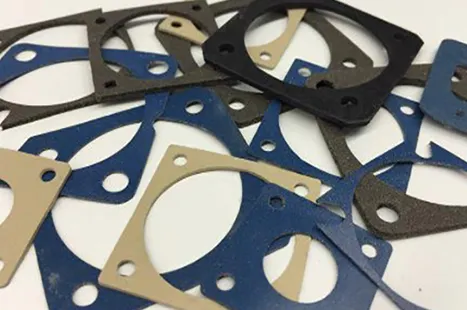
Modern electronic devices pack ever-higher clock speeds and sensitive antennas into smaller footprints. That density makes them vulnerable to electromagnetic interference (EMI). Left unchecked, EMI can corrupt data, cause intermittent faults, and even pose safety hazards in mission-critical devices. Engineers across medical, aerospace, automotive, and telecommunications fields must treat EMI as a design constraint rather than an afterthought. Otherwise, regulatory failures and reputational damage become very real risks.
Do You Know What EMI Is and Why It Matters?
Electromagnetic interference refers to unwanted radiated or conducted energy that disrupts normal electronics operation. High-speed processors, switching power supplies, and wireless transmitters within your own device can generate noise, while nearby motors, radio towers, or even lightning can inject external signals. In a medical monitor, that noise could distort patient readings; in an aerospace control module, it might create navigation errors. Industries regulated by the FCC, FDA, or MIL-STD guidelines require strict control of emissions and susceptibility, so understanding EMI’s sources and effects is the first step toward compliance and reliability.
How Does a Shielding Gasket Silence the Noise?
An effective shield doesn’t just wrap your assembly in any metal—it uses conductive materials designed to reflect and absorb unwanted signals across your operating frequency range. For example, Monel and aluminum knitted wire meshes excel at high-frequency shielding, while conductive silicone filled with nickel-coated graphite balances performance and cost. Proper shielding also involves minimizing seams, gaps, and joints that can allow energy to leak. East Coast Shielding’s custom enclosures and gaskets are engineered for electrical continuity across mating surfaces, ensuring that enclosure panels, seams, and doors remain electrically bonded. By matching materials to your device’s spectrum and environment, you can keep emissions contained and block incoming noise without over-engineering.
Why Are EMI Gaskets Your Best Defense?
Even with a solid enclosure, microscopic gaps around covers, access ports, or connectors can act as antennas. EMI gaskets bridge those gaps by creating a continuous conductive path while also sealing out dust, water, and chemicals. East Coast Shielding offers several specialized gasket families to address various challenges.
- Conduct-O-Knit knitted wire mesh combines an elastomer core with Monel or aluminum mesh, providing both resilience and high shielding effectiveness. These gaskets are ideal for rugged aerospace panels and military cabinets.
- Conduct-O-Seal combo gaskets pair conductive mesh with a separate elastomer strip for environmental sealing. This dual-function design simplifies installation on enclosures that need both EMI suppression and weatherproofing.
- Conduct-O-Elastomer conductive silicone features fillers such as silver-plated aluminum or nickel graphite to meet MIL-G-83528 requirements, while offering flexibility and chemical resistance. Use them when you need high performance across a broad frequency band.
- Oriented wire in silicone gaskets embeds perpendicular wires into a silicone matrix to create an effective shield and pressure seal, making them well-suited for housings with irregular flanges.
- Conduct-O-Foam fabric-over-foam gaskets wrap conductive fabric around a compressible foam core. They easily conform to uneven surfaces in consumer electronics and server racks without requiring high compression forces.
Each of these options turns a potential radiating seam into a robust barrier tailored to the mechanical and environmental needs of your design.
What Should You Consider When Choosing Shielding?
The ideal shielding strategy strikes a balance between electromagnetic performance and mechanical and environmental realities. Material conductivity is not the only factor—compression set, environmental sealing, and ease of installation all matter. For high-humidity or chemically exposed environments, silicone-based conductive elastomers resist degradation while maintaining contact pressure. At frequencies above 1 GHz, knitted Monel mesh or oriented wire gaskets offer superior attenuation. Adhesive-backed solutions, such as Conduct-O-Bond ECS2000 and ECS5000, provide a convenient way to attach gaskets without the need for hardware, thereby saving assembly time. East Coast Shielding works with engineers to consider frequency spectra, operating temperatures, vibration levels, and required ingress protection before recommending a specific gasket or enclosure design.
Ready to Protect Your Electronics from EMI?
Electromagnetic interference is an invisible threat, but it doesn’t have to derail your project. By understanding EMI sources, selecting the right materials, and sealing every seam with high-performance gaskets, you can meet stringent regulatory requirements and deliver reliable products. East Coast Shielding partners with design teams from concept through production, offering custom fabrication, rapid prototyping, and a full suite of materials—knitted wire mesh, conductive elastomers, fabric-over-foam, oriented wire gaskets, and conductive adhesives. If you’re ready to evaluate your design’s vulnerabilities and turn shielding into a competitive advantage, let’s talk about how our engineered solutions can ensure your electronics perform flawlessly in today’s noisy world.