


EMI Shielding Products
- Custom Gasket Fabrication
- Connector Gaskets
- Bonded O Ring
- Custom Gaskets
- Conduct-O-Knit Knitted Wire Mesh
- Conduct-O-Seal Combo Gasket
- Conduct-O-Elastomer
- Conduct-O-Seal Oriented Wire in Silicone Gasket Material
- Conduct-O-Mesh Tape
- Conduct-O-Foam
- Conduct-O-Bond
- Optical Filters For Electronic Displays
- Shielded Vent Panels
- 300 Series
How to Ensure Effective EMI Shielding: Designing EMI Gaskets for Electric Vehicle Battery Packs
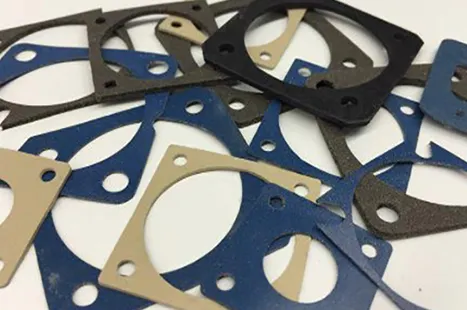
Electric vehicle battery packs may be encased in metal. Still, those seams can leak more than you think: electromagnetic interference can sneak through tiny gaps even while the housing must survive fire, vibration, and temperature swings. Designing an EMI gasket for an EV battery is a balancing act between electromagnetic silence and environmental toughness.
The reality is that only flame-retardant conductive elastomers or carefully designed composites meet the dual demands of shielding and safety. Engineers choosing an EMI gasket for a battery pack must weigh attenuation, flammability, compression, and heat transfer. Hence, the enclosure protects both electronics and passengers.
Understanding the Challenges in EV Battery Pack Sealing
Battery packs face demanding conditions: thermal cycling during charging and discharging, exposure to road debris and fluids, and the potential for thermal runaway events. An EMI gasket must therefore do more than block radio waves - it must also maintain a watertight seal, resist fire, and remain elastic over many temperature cycles.
Materials traditionally used for metal enclosures - solid metal finger stock or knitted wire - are too rigid or heavy for large battery lids. Polymer composites and elastomeric gaskets provide a better balance of flexibility and shielding.
The NASA Marshall handbook notes that good metal-to-metal contact and clean mating surfaces are essential for any conductive gasket. In battery housings, this means the lid and tray must be flat and free of paint at the gasket interface. Clamping hardware should provide uniform pressure around the perimeter to prevent gaps. Because battery packs are often permanently sealed at the factory, the gasket must retain its properties throughout the vehicle's life.
Material Selection for EV EMI Gaskets
Flame-retardant conductive elastomers
Fluorosilicone gaskets filled with silver-plated copper particles (MIL-DTL-83528 Type C) offer high shielding and chemical resistance. According to the Defense Logistics Agency, these materials achieve around 110 dB attenuation at 10 GHz and can operate from −55°C to +125°C. They are also resistant to jet fuels and solvents, making them suitable for automotive environments. Flame-retardant versions meet UL 94 V-0, ensuring that the gasket will not propagate flame if exposed to heat. Nickel-graphite-filled silicones provide a lower-cost option with good conductivity and may be sufficient for moderate shielding requirements.
Polymer composites and lightweight alternatives
Emerging polymer composites combine thermoplastic elastomers with conductive fillers such as carbon black, graphene, or carbon nanotubes. A recent open-access study notes that thermoplastic elastomer blends with selectively distributed carbon black can achieve notable EMI attenuation while remaining flexible and lightweight. These materials are attractive for EV applications where weight reduction is critical. However, their shielding performance at high frequencies and under compression is still evolving, so they are often used in combination with metallic gaskets or as internal absorbers.
Design Considerations: Compression, Splicing, and Environmental Sealing
Achieving uniform compression
Large battery packs may use extruded gasket profiles spliced into rectangular loops. Uniform compression around the perimeter is crucial to prevent localized gaps. Engineers should specify flange widths and fastener spacing that provide consistent pressure. The NASA handbook advises that the contact pressure must be high enough for the gasket to make metal-to-metal contact even through oxide films. Compression limiters can prevent over-compression and ensure the gasket's elastomeric core maintains resilience over many cycles.
Splicing and sealing long perimeters
For long perimeters, gaskets are often spliced or vulcanized into closed loops. The splice should be electrically bonded and mechanically secure to avoid becoming a leakage point. Some manufacturers offer conductive adhesives or tape to bridge the joint; NASA's bonding standard notes that conductive bridges can be made with fasteners or adhesives. Where environmental sealing is critical, consider using dual-durometer gaskets that combine a soft foam for water sealing with a conductive layer for EMI shielding.
Environmental and thermal ratings
Battery housing is typically designed to IP67 or higher ingress protection ratings, meaning the gasket must withstand submersion and dust. Choose materials certified under UL 50E for enclosure sealing and UL 94 V-0 for flammability. Thermal management is also essential; gaskets should have low compression set across the vehicle's operating temperature range and should not impede heat transfer from the battery modules. Some advanced gaskets incorporate graphite sheets or thermally conductive fillers to spread heat while providing EMI shielding.
Selecting the Right EV Battery EMI Gasket
To design an effective EV battery pack gasket, several factors must be considered.
- Specify performance requirements: Determine required shielding effectiveness, flame rating, and ingress protection. For high-power EVs, aim for ≥100 dB attenuation up to several gigahertz.
- Choose the base material: Select a fluorosilicone or nickel-graphite silicone rated for UL 94 V-0 and compatible with the enclosure metals. Consider polymer composites for secondary shielding or weight reduction.
- Design for compression: Provide sufficient flange width and fasteners to uniformly compress the gasket; include compression stops to prevent permanent set.
- Plan the splice: Use vulcanized or bonded splices and verify electrical continuity across the joint. Consider conductive adhesives if a seamless splice cannot be achieved.
- Test prototypes: Validate shielding and sealing performance under thermal cycling, vibration, and environmental exposure before production.