


EMI Shielding Products
- Custom Gasket Fabrication
- Connector Gaskets
- Bonded O Ring
- Custom Gaskets
- Conduct-O-Knit Knitted Wire Mesh
- Conduct-O-Seal Combo Gasket
- Conduct-O-Elastomer
- Conduct-O-Seal Oriented Wire in Silicone Gasket Material
- Conduct-O-Mesh Tape
- Conduct-O-Foam
- Conduct-O-Bond
- Optical Filters For Electronic Displays
- Shielded Vent Panels
- 300 Series
What Are the Most Common Pitfalls in EMI Shielding and How Can Your Business Avoid Them?
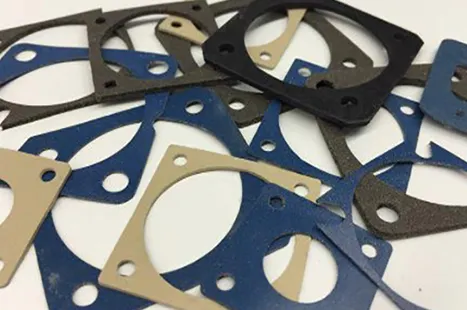
Every electronic engineer and product developer faces the challenge of electromagnetic interference (EMI). Unseen and often underestimated, EMI is capable of compromising device performance, causing system inaccuracies, and even affecting user safety. Businesses striving to maintain high standards in electronics manufacturing often find themselves unexpectedly entangled in EMI issues, especially as electronic systems become smaller, more powerful, and more complex. Without careful attention to common pitfalls, EMI shielding solutions can fail to deliver expected performance, resulting in costly revisions, reputational damage, and regulatory issues.
Identifying and proactively avoiding the most prevalent pitfalls is critical for businesses to ensure reliable, effective, and cost-efficient EMI shielding solutions. There are four major areas where companies commonly make errors in EMI shielding design and implementation: safety considerations, shielding effectiveness miscalculations, scalability and manufacturing pitfalls, and overall cost management challenges. Understanding these pitfalls and adopting strategies to mitigate them will help ensure your products deliver dependable performance while meeting stringent regulatory and market requirements.
Pitfall #1: Safety Risks of Traditional Reflection-Dominant EMI Shields
When businesses select EMI shielding materials, the priority often leans toward materials offering high conductivity. While highly conductive metals and materials like MXenes and graphene promise strong shielding, their predominantly reflective mechanism poses hidden risks. Instead of fully absorbing electromagnetic waves, these materials primarily reflect them, inadvertently generating secondary electromagnetic pollution. Such secondary radiation can disrupt nearby sensitive equipment in critical sectors, including medical devices, aerospace instrumentation, and military communications systems.
The risks associated with reflection-dominant EMI shields can include:
- Unintentional interference with medical devices, potentially causing erroneous readings or equipment malfunction
- Disruption of sensitive military or aerospace electronic systems, compromising mission safety and reliability
- Increased legal liabilities and regulatory compliance challenges due to secondary radiation interference
To ensure safety and reliability, businesses must select materials and structural designs that prioritize electromagnetic wave absorption. Opting for absorption-dominant shielding reduces secondary radiation and prevents harmful interference, thus safeguarding both end-users and brand reputation.
Pitfall #2: Misinterpretation and Misapplication of Shielding Effectiveness Metrics
A common yet costly mistake businesses encounter in EMI shielding design is the incorrect interpretation of key metrics used to evaluate shielding effectiveness. For example, designers frequently assume that higher Shielding Effectiveness by Absorption (SEA) compared to Shielding Effectiveness by Reflection (SER) automatically indicates absorption dominance. This misunderstanding overlooks critical distinctions: effective EMI absorption occurs only if the reflected component is genuinely minimal (SER below 3 dB or reflectance significantly lower than absorbance).
Common mistakes related to misinterpreting EMI shielding metrics include:
- Assuming a high SEA/SER ratio automatically equates to absorption dominance
- Overestimating a material's effectiveness based solely on its intrinsic conductivity, ignoring the critical need for optimized impedance matching
- Miscalculating the required thickness or filler content necessary to achieve targeted absorption rates
To avoid these pitfalls, businesses must use precise testing protocols and analytical methods when evaluating EMI shielding materials. It is critical to assess both reflectance and absorbance independently and ensure impedance matching is optimized, thereby providing true absorption-dominant performance.
Pitfall #3: Overlooking Structural Design in Favor of Material Selection
One of the most prevalent pitfalls is prioritizing material choice without giving due attention to structural design. Selecting an EMI shielding material solely based on intrinsic properties, such as high electrical conductivity, may seem logical. However, neglecting thoughtful structural design can undermine overall shielding performance. Even advanced materials like MXenes and conductive polymers, without carefully engineered structural configurations, can reflect electromagnetic waves rather than absorb them.
Key risks related to structural design oversight include:
- Development of reflection-dominant shields that fail to reduce secondary electromagnetic pollution
- Suboptimal shielding performance, requiring costly redesigns or additional layers for correction
- Compromised structural integrity or mechanical performance due to inadequate attention to structural detail
To address these issues, businesses must integrate material selection with deliberate structural design considerations. Leveraging innovative techniques such as additive manufacturing and sophisticated layering can significantly improve internal attenuation mechanisms, dielectric and magnetic losses, and multiple reflections, resulting in genuinely absorption-dominant EMI shielding solutions.
Pitfall #4: Scalability and Cost Challenges in Advanced EMI Shielding Solutions
Transitioning from laboratory-proven EMI shielding solutions to industrial-scale production often proves challenging. Advanced shielding materials, such as polymer nanocomposites, aerogels, and highly conductive thin films, frequently entail high filler loading and complex manufacturing processes. These complexities escalate both production costs and scalability challenges. Even highly promising lab-based EMI shielding innovations can become economically impractical when implemented at an industrial scale.
Typical cost and scalability issues businesses face include:
- High costs associated with achieving the necessary filler loading levels in polymer nanocomposites
- Expensive and energy-intensive production processes, including vacuum filtration and hydrofluoric acid etching (used in MXene production), complicating commercial scalability
- Difficulties in controlling manufacturing variables, resulting in batch-to-batch inconsistencies and quality control challenges
- Limitations in 3D printing techniques, such as nozzle blockages, void formation, and material compatibility constraints, hindering rapid industrial adoption
To circumvent these pitfalls, businesses should carefully assess the practical scalability of EMI shielding solutions during initial design phases. Exploring alternative fabrication techniques, leveraging scalable additive manufacturing methods, and pursuing continuous, cost-effective manufacturing processes can mitigate these challenges and enhance economic viability.
Strategic Recommendations for Businesses to Avoid EMI Shielding Pitfalls
Proactively addressing these pitfalls demands strategic, thoughtful approaches. The following recommendations can help businesses overcome common EMI shielding challenges.
- Prioritize Absorption-Driven Design: Select shielding materials and structures that prioritize absorption over reflection to minimize secondary electromagnetic pollution, especially critical for medical and military applications.
- Rigorous Metric Validation: Employ precise measurement and evaluation protocols to accurately assess SEA, SER, reflectance, and absorbance values. Avoid common metric misinterpretations by thoroughly analyzing impedance matching and reflection behaviors.
- Integrated Structural and Material Approaches: Combine thoughtful structural design with advanced material selection, using techniques like 3D printing and multilayered configurations. Optimize internal structures to enhance dielectric, magnetic, and ohmic losses, thereby maximizing absorption effectiveness.
- Scalability and Economic Feasibility Assessments: Evaluate potential solutions rigorously for scalability and industrial feasibility from early development stages. Choose cost-effective manufacturing processes and ensure they align with long-term production goals, thus reducing costs and improving product profitability.
Enhancing Reliability and Competitiveness Through Effective EMI Shielding
Understanding and knowing how to avoid these common pitfalls is essential for businesses operating in competitive, regulation-driven markets. By proactively identifying and addressing safety risks, accurately interpreting effectiveness metrics, thoughtfully integrating structural design considerations, and rigorously assessing scalability and cost, companies can significantly enhance their EMI shielding effectiveness. This approach ensures compliance with stringent safety and regulatory standards, and also contributes to long-term profitability, market competitiveness, and the successful deployment of reliable, high-performance electronic products.
In short, addressing these EMI shielding pitfalls is more than a technical necessity; it is a strategic imperative. It positions businesses to deliver consistently reliable, compliant, and competitive electronic solutions to an increasingly demanding market.