


EMI Shielding Products
- Custom Gasket Fabrication
- Connector Gaskets
- Bonded O Ring
- Custom Gaskets
- Conduct-O-Knit Knitted Wire Mesh
- Conduct-O-Seal Combo Gasket
- Conduct-O-Elastomer
- Conduct-O-Seal Oriented Wire in Silicone Gasket Material
- Conduct-O-Mesh Tape
- Conduct-O-Foam
- Conduct-O-Bond
- Optical Filters For Electronic Displays
- Shielded Vent Panels
- 300 Series
The Hidden Costs of "Heroic" EMI Shielding: What Every Business Needs to Know Beyond SE Metrics
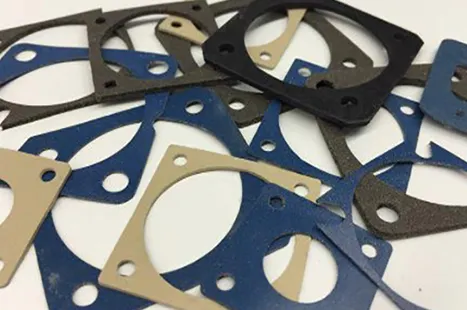
A comprehensive EMI shielding solution extends far beyond mere SE metrics. The most effective approaches balance electrical conductivity, impedance matching, environmental and safety considerations, and manufacturing scalability. Companies must recognize that a strategy based primarily on reflection, driven by high conductivity materials, may lead to unforeseen problems such as secondary electromagnetic pollution, hazardous manufacturing processes, poor scalability, and high long-term operational costs.
The Real Implications of Reflection-Dominant Shielding
Shielding mechanisms typically fall into two categories: absorption and reflection. Reflection-dominant materials, characterized by high electrical conductivity, often seem like ideal choices. Metals like copper, aluminum, and advanced conductive polymers appear attractive due to their impressive shielding effectiveness ratings. However, a reliance solely on reflection-dominant materials can inadvertently introduce significant practical issues.
High reflection rates create unintended secondary electromagnetic pollution, posing threats to nearby sensitive electronic equipment. This is particularly critical in the following environments:
- Medical facilities, where reflected interference can disrupt life-saving diagnostic or therapeutic equipment, compromising patient safety.
- Military operations, where reflected electromagnetic signals can compromise communications and operational security, risking mission success.
Moreover, highly conductive reflective materials can cause significant impedance mismatches. This phenomenon leads to a substantial portion of electromagnetic waves being reflected at the shield's surface, preventing internal absorption and dissipation. The result is reduced overall effectiveness, despite high SE ratings.
Consider MXenes, highly promising two-dimensional materials often highlighted for their superior conductivity and shielding capabilities. A single Ti₃C₂Tx MXene monolayer achieves impressive EMI shielding effectiveness. However, its high reflectivity and instability in humid conditions limit practical applications. Even slight environmental variations can degrade performance significantly, undermining reliability in field conditions.
To achieve optimal shielding effectiveness, materials must allow electromagnetic waves to penetrate and dissipate within their structure rather than merely bouncing them back. Reflective shields may boast impressive SE numbers but fall short in real-world applications, highlighting the necessity for absorption-oriented solutions.
The Unseen Consequences of Material and Structural Choices
Selecting shielding materials involves complex decisions beyond conductivity and SE metrics. Polymer nanocomposites, thin films, porous structures, and multilayered designs each offer unique advantages and drawbacks. If chosen or engineered without thorough consideration of real-world conditions, these materials may prove problematic.
Polymer Nanocomposites: Strengths and Hidden Limitations
Polymer nanocomposites, comprising conductive fillers embedded within insulating polymers, are attractive due to their lightweight nature and excellent processability. They achieve strong EMI shielding by creating interconnected conductive networks at low filler concentrations, significantly reducing material costs.
However, the high filler content often required to reach adequate conductivity levels introduces specific challenges:
- Mechanical properties can deteriorate, leading to reduced flexibility, compromised structural integrity, and susceptibility to early failure.
- Processing issues, such as shear-induced filler agglomeration during injection or extrusion molding, can drastically affect consistency and performance across production batches.
- The necessary high thickness of polymer composites can be impractical for compact or miniaturized electronics, limiting their usability in advanced technological applications.
These hidden factors often become apparent only after significant R&D investments, resulting in costly corrections or compromised product performance.
Conductive Thin Films: Stability and Reliability Issues
Conductive thin films, including MXene films and graphene sheets, offer compact and lightweight shielding options. These films typically exhibit extraordinary electrical conductivity, making them attractive candidates for high-performance EMI shielding.
Yet, practical application reveals hidden limitations:
- Most thin films primarily shield through reflection, lacking mechanisms for internal scattering or absorption of electromagnetic waves.
- Stability issues, particularly in humid environments, can cause rapid degradation in conductivity and overall effectiveness.
- Mechanical durability is often limited, causing problems in long-term deployment and increasing maintenance costs due to frequent replacements.
Thin film fabrication methods, such as vacuum filtration, may also lead to air bubble trapping and manufacturing inconsistencies, undermining both quality and reliability. These issues compound into costly operational challenges that businesses must address well beyond initial material selection.
Porous Structures and Aerogels: Practical Considerations
Porous structures, including foams and aerogels, provide significant advantages such as increased flexibility, reduced weight, and enhanced internal scattering of electromagnetic waves. They have become increasingly popular for lightweight and flexible shielding applications.
Nevertheless, several practical challenges limit their broader industrial adoption:
- Excessive electrical conductivity at their surface can lead to significant reflection, preventing effective internal absorption.
- Aerogels are particularly prone to brittleness and lack precise control over their internal composition, morphology, and porosity levels during production.
- High manufacturing costs and the difficulty of scaling up production processes restrict their transition from laboratory research to commercial markets.
Businesses investing in these promising materials must recognize and address these practical considerations to ensure their shielding solutions are commercially viable and functionally robust.
Manufacturing Scalability: Lab-to-Industry Challenges
A significant yet often overlooked issue is the difficulty of scaling EMI shielding solutions from laboratory demonstrations to commercial-scale production. Advanced materials and innovative designs frequently exhibit impressive laboratory results, capturing significant industry interest. However, transitioning these solutions to mass production reveals hidden costs and manufacturing complexities.
Consider additive manufacturing techniques like 3D printing, which offer unparalleled design freedom and customization potential.
- Direct Ink Writing (DIW), Digital Light Processing (DLP), and Fused Deposition Modeling (FDM) can produce intricate and highly tailored shielding structures. Yet, limited material compatibility and precise ink rheology requirements often hinder consistent large-scale production.
- High filler content needed for achieving adequate shielding effectiveness in FDM often leads to manufacturing issues such as nozzle blockages or structural imperfections.
- DLP methods, although precise, are costly and often limit the size and scalability of final shielding products.
These scalability challenges imply significant hidden costs and risks, making it difficult to translate lab-scale success into viable commercial solutions.
Beyond SE Numbers to Real-World Success
Businesses involved in electronics manufacturing must recognize the hidden complexities underlying impressive EMI shielding effectiveness metrics. Focusing exclusively on high SE values can obscure practical challenges and hidden costs associated with material selection, structural design, manufacturing scalability, and long-term reliability.
An effective EMI shielding strategy requires a holistic approach that balances absorption and reflection mechanisms, ensures safe and scalable manufacturing processes, considers long-term material stability and reliability, and carefully manages costs. By adopting this comprehensive perspective, businesses can develop more sustainable and successful EMI shielding solutions, ensuring their products achieve optimal performance, enhanced safety, and lasting profitability in real-world applications.