


EMI Shielding Products
- Custom Gasket Fabrication
- Connector Gaskets
- Bonded O Ring
- Custom Gaskets
- Conduct-O-Knit Knitted Wire Mesh
- Conduct-O-Seal Combo Gasket
- Conduct-O-Elastomer
- Conduct-O-Seal Oriented Wire in Silicone Gasket Material
- Conduct-O-Mesh Tape
- Conduct-O-Foam
- Conduct-O-Bond
- Optical Filters For Electronic Displays
- Shielded Vent Panels
- 300 Series
Why Conductive Polymers Are Gaining Ground: A Deeper Look at EMI Gasket Solutions
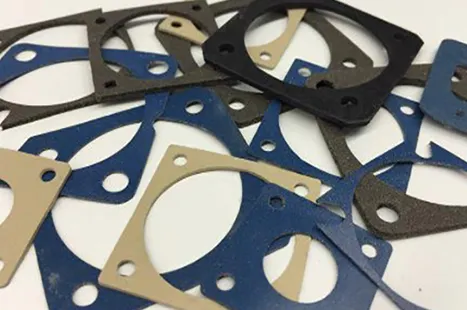
Many professionals encounter repeated communication glitches or data integrity issues in products that otherwise seem flawless. They often realize that stray electromagnetic noise—rather than obvious mechanical faults—is compromising performance. As electronics advance to higher speeds and smaller footprints, time-tested solutions like thick metal enclosures or rigid RF shields can feel excessive or incompatible with evolving product requirements. This has created a surge of interest in materials that can adapt more gracefully to the intricate shapes and varied demands of modern devices.
Not every solution that blocks interference has to be heavy or prone to corrosion. In fact, many engineers now regard conductive polymers as the middle ground between cost, mechanical pliability, and robust EMI shielding performance. They see how these formulations integrate smoothly into today’s electronics without the penalties that rigid metals once imposed. Conductive polymers address immediate problems: insufficient design flexibility, high weight, and suboptimal production costs. Choosing polymer-based gaskets is not a compromise but rather a strategic advantage for advanced EMI containment.
Is There a Need for Lighter, More Flexible Materials?
Forward momentum in many industries depends on electronics continuing to shrink while increasing in speed. Yet the smaller these devices get, the more susceptible they become to stray interference. Bulky or stiff components, once considered acceptable, can now be a hindrance, especially for items with unusual form factors. In scenarios such as wearable technology or medical sensors, every fraction of an ounce saved enhances user comfort or operational efficiency.
Moreover, certain metal-based enclosures can prove too rigid or prone to corrosion in humid or outdoor settings. By contrast, chemically stable polymers introduce a level of resilience that can lengthen product life. From an engineering viewpoint, even seemingly minuscule weight reductions can yield large benefits in sectors like aerospace, where performance is tied closely to total mass. Thus, adopting more flexible, lightweight gaskets directly ties into streamlining production and meeting new design briefs.
Polymers provide a gentle compromise that neither sacrifices protection nor inflates manufacturing complexity. Indeed, with correct formulation, polymer-based gaskets offer near-metallic levels of conductivity plus outstanding formability. They become an asset rather than a reluctant add-on— especially for designs with complex geometries. In short, the push toward lighter, more adaptable solutions is forcing a reevaluation of old assumptions about which materials can reliably block interference.
Many realize that meeting emerging demands calls for something beyond standard metal plates. Lighter, more flexible approaches stand ready to fill that gap, and in many cases, conductive polymers have emerged as an unmatched fit.
How Conductive Polymers Hold Their Own
A commonly asked question is: Can these newer composites really match metal in terms of EMI shielding? Four core points illustrate why the answer is increasingly yes.
- Tunable Conductivity: Polymers can be blended with fillers such as carbon nanotubes, graphene, or metallic particles. Adjusting filler content and distribution helps dial in an exact conductivity range—enough to effectively reflect or absorb interfering waves.
- Seamless Integration: Instead of retrofitting rigid RF shields onto an existing design, conductive polymers can be molded or extruded directly into complex shapes, forming gaskets and enclosures in one operation. This smooths out production bottlenecks and reduces points where interference could leak.
- Improved Elasticity: Metals can crack or deform if the device endures repeated impacts or thermal cycles. Polymers typically withstand stress more gracefully, and that resilience can maintain the seal’s integrity over time.
- Customizable Thickness: Because many polymer gaskets are produced with precise thickness control, engineers can shape how electromagnetic waves reflect or attenuate at different frequencies. Metal solutions often don’t permit such fine-grained adaptation without specialized machining.
The net impact is a material that addresses the real headaches of modern design: odd shapes, weight sensitivity, or potentially harsh environments. A polymer-based gasket can be layered over certain regions while leaving other elements uncovered, resulting in a more efficient architecture.
These combined benefits have propelled conductive polymers from a niche alternative to a mainstream contender. Higher throughput manufacturing methods and dropping filler prices are further fueling interest. As engineers confirm that these materials can deliver comparable or sometimes even superior performance, they become bolder in specifying polymers for serious EMI tasks.
Do They Survive Industrial Realities?
One hesitation that arises is whether a polymer-based solution will hold up under rugged conditions. Historically, metal shields have set high expectations for shock, vibration, and temperature extremes. However, examples in automotive electronics highlight how advanced polymer gaskets can withstand the under-hood environment of heat, chemical exposure, and mechanical stress.
In fact, certain conductive blends are specifically designed to combat corrosion and degrade at a slower rate than some metallic coatings. They often require minimal upkeep, with no need for periodic re-plating. Meanwhile, complex air- and fluid-sealing conditions—like those in off-road machinery—are served well by compressible yet robust polymeric gaskets. They mold themselves snugly around corners and irregularities, reducing the chance of interference leaks.
That adaptability also extends to rework or repairs. If an assembly needs partial disassembly, polymer gaskets can be replaced without unbolting large structural enclosures. Maintenance teams appreciate a more straightforward procedure, particularly in mission-critical operations that can’t afford extended downtime. This real-world durability underscores that polymeric shielding isn’t just a lab curiosity; it’s a proven path for those seeking longevity and performance.
Consistent reliability across operational temperatures, chemical exposures, and vibrations cements polymer solutions as feasible and, in many cases, preferable, meeting or exceeding the demands typically placed on older shielding methods.
Capturing Efficiency and Performance Gains
Even the best materials matter little if they don’t mesh well with existing workflows. Conductive polymers come into their own by linking technical performance with a highly efficient fabrication process. Because many blends can be injection-molded or extruded, entire product cycles accelerate. Less time is spent sourcing specialized metal forms or retooling for intricate shapes.
Additionally, once volume ramps up, the cost structure often favors polymer-based solutions. Repeated tasks, such as applying conductive coatings to metal, become unnecessary. Freed from some of these finishing steps, a production line can channel resources elsewhere. In consumer electronics, where iteration speeds are high, every improvement in design agility can confer a market edge.
Shorter lead times, reduced complexity, and high reliability are powerful motivators. Clients no longer have to weigh the pros and cons of partial coverage or multiple-layered shields. They can unify form, fit, and function in a single step. The synergy between polymer flexibility and advanced fillers ensures that devices remain shielded from external interference while simplifying the mechanical design.
Thus, businesses tap into a competitive advantage by capitalizing on how polymer solutions integrate with modern manufacturing. They deliver streamlined production, robust EMI performance, and an overall package that’s tough to beat.
Reaffirming the Power of Conductive Polymers
Engineers face a new era defined by tighter product constraints and more severe interference threats. Old assumptions that only heavy metal solutions suffice no longer ring true. Conductive polymers provide an alternative that tackles EMI head-on while enhancing design freedom, mechanical resilience, and manufacturing efficiency. This approach benefits organizations that need high-performing EMI gaskets without the drawbacks of classic metal-based shielding. The result is a future where thoughtful material choices align with both performance goals and modern design sensibilities.