


EMI Shielding Products
- Custom Gasket Fabrication
- Connector Gaskets
- Bonded O Ring
- Custom Gaskets
- Conduct-O-Knit Knitted Wire Mesh
- Conduct-O-Seal Combo Gasket
- Conduct-O-Elastomer
- Conduct-O-Seal Oriented Wire in Silicone Gasket Material
- Conduct-O-Mesh Tape
- Conduct-O-Foam
- Conduct-O-Bond
- Optical Filters For Electronic Displays
- Shielded Vent Panels
- 300 Series
Conductive Fabric EMI Gaskets: When and Why They're Your Best Choice
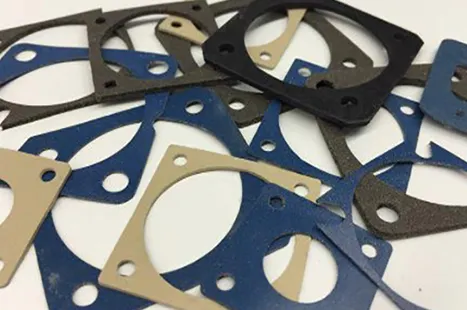
Electronic designs face constant challenges from electromagnetic interference (EMI), which can silently disrupt signals, corrupt critical data, and compromise regulatory compliance. If you're an engineer or product designer, you understand the frustration of EMI causing unexpected test failures, challenging redesigns, and looming deadlines. While many shielding solutions exist, selecting the correct approach is crucial—not only for achieving reliable EMI shielding but also for ensuring your product meets performance, reliability, and compliance requirements.
Conductive fabric EMI gaskets offer a uniquely effective solution in many scenarios. With their lightweight construction, excellent compressibility, consistent EMI performance, and ease of integration, these gaskets address common EMI shielding challenges that rigid solutions often struggle to overcome. To help you make the best choice, we'll outline exactly when conductive fabric gaskets are optimal, the practical benefits they deliver, and clear guidelines for their successful implementation.
What Exactly Is a Conductive Fabric EMI Gasket?
Conductive fabric EMI gaskets consist of a soft elastomeric or foam core wrapped in conductive fabric—typically metalized with silver, nickel, or copper. This construction combines elasticity, ease of handling, and consistent electrical conductivity into a single reliable shielding solution.
Unlike metal fingerstock or molded elastomer gaskets, conductive fabric gaskets compress gently and evenly under minimal force, providing continuous metal-to-metal electrical contact between mating surfaces. This ensures robust shielding effectiveness across a broad range of electromagnetic frequencies, typically offering from 70–100 dB of attenuation across frequency ranges from low MHz well into the GHz range.
Their flexible, conformable nature allows conductive fabric gaskets to adapt perfectly to uneven surfaces or intricate contours. They reliably fill gaps and seams without requiring high force, special tools, or costly machining, dramatically simplifying assembly.
Key Advantages of Conductive Fabric EMI Gaskets
When compared to other gasket options, conductive fabric EMI gaskets stand out in several key areas.
- Highly Compressible with Low Closure Force: Conductive fabric gaskets require minimal pressure to achieve reliable sealing. This is ideal for applications involving delicate components, frequently opened compartments, or lightweight structural designs.
- Space and Weight Efficiency: Being significantly lighter and slimmer than metal or molded elastomer alternatives, conductive fabric gaskets are perfect for aerospace, portable electronics, drones, and automotive applications where minimizing weight and space is crucial.
- Easy and Rapid Installation: Conductive fabric gaskets are often supplied with adhesive backings. This simplifies assembly significantly, eliminating complex machining operations, groove design, or additional mounting hardware, thus reducing assembly time and manufacturing complexity.
- Consistent EMI Shielding Performance: Conductive fabric gaskets deliver stable and consistent shielding effectiveness, commonly ranging from 70 to 100 dB, across moderate frequencies to high microwave frequencies, providing reliable EMC compliance for diverse electronic applications.
- Environmental Durability: These gaskets offer moderate resistance to temperature cycles, humidity, and other environmental factors commonly encountered in commercial, automotive, and industrial settings, thereby maintaining stable electrical and mechanical performance.
When Should You Choose a Conductive Fabric EMI Gasket?
Conductive fabric gaskets excel in specific scenarios where traditional EMI shielding methods may struggle to perform effectively.
- Scenario 1: Lightweight or Portable Electronic Devices - Portable medical devices, handheld communication units, and consumer electronics often have tight weight and space constraints. Conductive fabric gaskets provide high shielding effectiveness without adding unnecessary bulk, making them ideal for devices where size, weight, and ease of access are crucial.
- Scenario 2: Sensitive Equipment and Frequent Access Applications - When devices require routine maintenance or frequent opening, a gentle, low-compression-force gasket is critical. Conductive fabric gaskets compress and rebound consistently, allowing for repetitive use without compromising shielding performance or mechanical integrity.
- Scenario 3: Large Panel Doors and Shielded Room Entrances - Conductive fabric gaskets are beneficial for large door openings or shielded room environments, such as EMC test chambers or server room enclosures. They reliably maintain uniform shielding contact across large distances and irregular surfaces without excessive force or special grooves.
When a Conductive Fabric Gasket Is NOT Ideal
Conductive fabric gaskets are not a universal solution. There are clear situations where you should consider alternative EMI shielding materials.
- High Mechanical Durability Demands: Applications with very high clamping forces, repeated heavy compression cycles, or rugged conditions may require reinforced elastomers or metal gaskets to withstand prolonged stresses without wear.
- Harsh Environmental Exposure: Continuous exposure to severe chemicals, salt fog, extreme moisture, or very high temperatures may cause fabric-based gaskets to degrade faster than specialized elastomers or corrosion-resistant metallic options.
- Extremely High Frequency Shielding: For demanding shielding effectiveness (>100 dB) at extremely high frequencies (>10 GHz), specialized metal EMI gaskets or waveguide seals typically offer superior performance.
Best Practices for Designing with Conductive Fabric EMI Gaskets
To achieve maximum performance and reliability with conductive fabric gaskets, follow these key design practices.
- Ensure Proper Compression: Conductive fabric gaskets typically operate optimally at 20–40% compression. This allows the fabric to establish continuous electrical contact without overstressing the gasket material.
- Design Thoughtful Mounting Surfaces: Gasket mating surfaces must be flat and stable to achieve uniform compression and effective shielding. Remove sharp edges, burrs, or uneven machining to protect the gasket from premature wear or failure.
- Material Compatibility and Galvanic Considerations: Match gasket materials carefully with enclosure metals to avoid galvanic corrosion. Nickel-coated fabric works well with aluminum; silver-coated fabric provides optimal conductivity for highly sensitive electronics.
Achieving Reliable EMI Shielding, Simply and Effectively
Conductive fabric EMI gaskets provide an efficient solution for various electronics shielding scenarios, effectively balancing reliable EMI protection with ease of installation and design flexibility. By carefully considering your application's compression needs, environmental factors, and frequency requirements, you can confidently choose conductive fabric as the ideal gasket material.
At East Coast Shielding, we stand ready to help you select and implement the optimal EMI shielding solution for your project, ensuring that you achieve reliable compliance, outstanding performance, and lasting success.
If you're facing a specific EMI shielding challenge or would like to discuss the best gasket options for your application, please contact us today. We look forward to collaborating with you to deliver shielding solutions that work, right from the start.